Life in Bournemouth East
Remembering the Indian Army in Bournemouth
Published: 29 October 2025
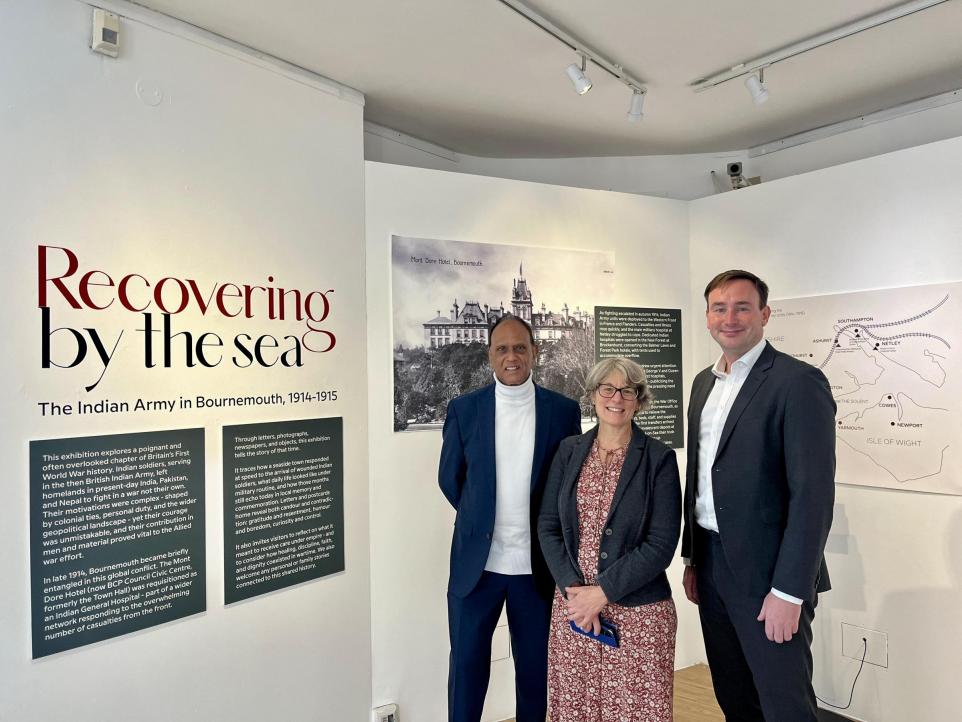
I recently visited the Russell-Cotes Art Gallery and Museum to observe the new exhibition; Recovering by the Sea: The Indian Army in Bournemouth, 1914-15.
The exhibition foregrounds the experiences and lives of the Indian soldiers who fought and died on the Western Front, and were cared for in Bournemouth upon their return from the fighting.
Presented at the museum are photographs, video footage and the first-hand accounts and diaries of those who stayed in our town, offering a precious insight into their lives.
Men of the British Indian Army took temporary refuge on the south coast in the first two years of the war, residing at what was then the Mont Dore Hotel, now the Bournemouth Civic Centre.
More than 1,300,000 Indian soldiers served with the British Expeditionary Force in the First World War, and more than 70,000 are thought to have given their lives for the Allied victory.
Britain will be forever grateful for their service.
At the museum atop East Cliff, I walked through the exhibition with Sarah Newman, Director of the Gallery and Museum and an architect of the Recovering by the Sea project, and Ramesh Lal of the BPC Indian Association.
Sarah said of the exposition: “This exhibition offers a poignant glimpse into a forgotten piece of Bournemouth’s history and contributes to a fuller understanding of the town’s role during the First World War.”
Ramesh said also; “This display brings their overlooked stories to life, ensuring all our communities remember their sacrifice with deep respect and gratitude.”
This exhibition serves as a reminder of the history of Indian life in our town and country.
I’m grateful for the team at the museum and their curation of this experience so that we may remember the service of those soldiers and their care by local people more than a century ago.
It’s a credit to our town that we have places like the Russell-Cotes Museum and Gallery where we can learn of the lives of those who came before us.
The exhibition will remain open until November 23, 2025. Admission is free, but tickets are required to access the historic house and galleries.